
How to Properly File in Ontario to Increase Rent
The numbers are officially out. The rent increase guideline from the Ontario government is 2.6% for 2026. This is the lowest rent increase in four years, with the government rationale being that it is capped at the current rate of inflation.
This government rent cap is only for existing tenants, and only for properties that were used as residential properties prior to November 15, 2018 (including as primary residences). You are allowed to increase rent as much as you want on any properties built or lived-in after that date.
Given the low amount of the increase, it’s not likely to make a major dent in your tenant’s finances, but some landlords may be nervous about increasing rent in the current economic climate. Let’s look at how you figure out the numbers and how you are supposed to notify your tenant of the increase.
How to Determine if You Should Increase Rent
Don’t decide to not increase rent for 2026 because you’ve heard that rents are decreasing. This tends to only be the case in condos, and even those prices have not decreased that much since 2023. Rent prices are mostly stable in non-condo properties in Toronto and the GTA. That doesn’t mean that you shouldn’t shop around for what similar properties are renting for in your area or building; you may even find that your rent is below market rate.
We covered the why and how of raising rent in this article about things smaller landlords can learn from the operations of larger landlords, known as “financial” landlords. The eye-popping number worth paying attention to is how financial landlords are, on average, 44% more profitable than small landlords.
If you want to save a click, one of the key takeaways was that financial landlords never miss an opportunity to raise rent. You shouldn’t either. As long as you’ve done your homework and know that your rental rate is fair for your area, go ahead and do the rent increase. A tenant that enjoys your property is not going to move because of a small increase, and if they do, they probably have other reasons for leaving.
If your property is in Toronto, your property taxes are going up by 6.9%, so this alone more than justifies the increase. Plus, there are probably other increases you’re looking at, such as utilities, condo fees, and more.
How to Properly Notify Your Tenants of The Increase
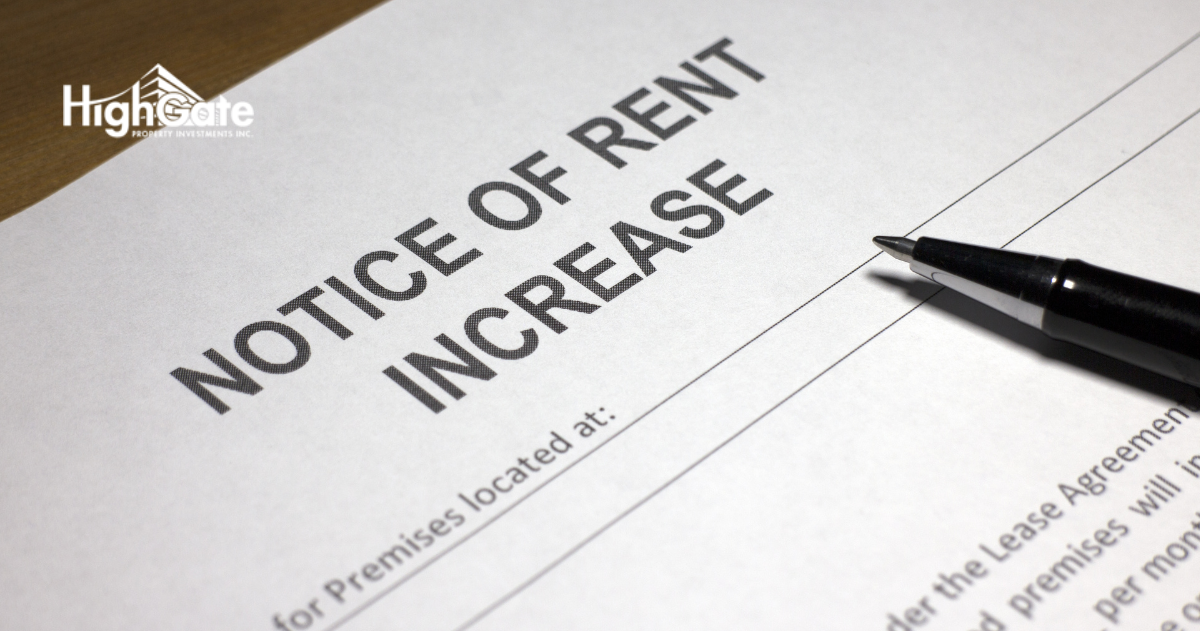
It’s a simple process, but one that you want to start on time so that you can effectively start charging the new rent on January 1, 2026. You must give notice of the increase using an N1 form 90 days before the increase is to take effect. So to start charging the increased rent on January 1, you need to deliver this form to your tenant by October 1, 2025. You are allowed to deliver the forms before that date as well, so you may want to get on it sooner rather than later.
The time to really think about where your unit is priced is when you initially rent it out, and our property management company can help you do that. When you’re with us, we also file these forms properly and on time, manage any tenant requests, and so much more that can help make your rental properties far more profitable. Contact us today to find out how.